
Trade-In With Negative Equity in Canada
March 13, 2026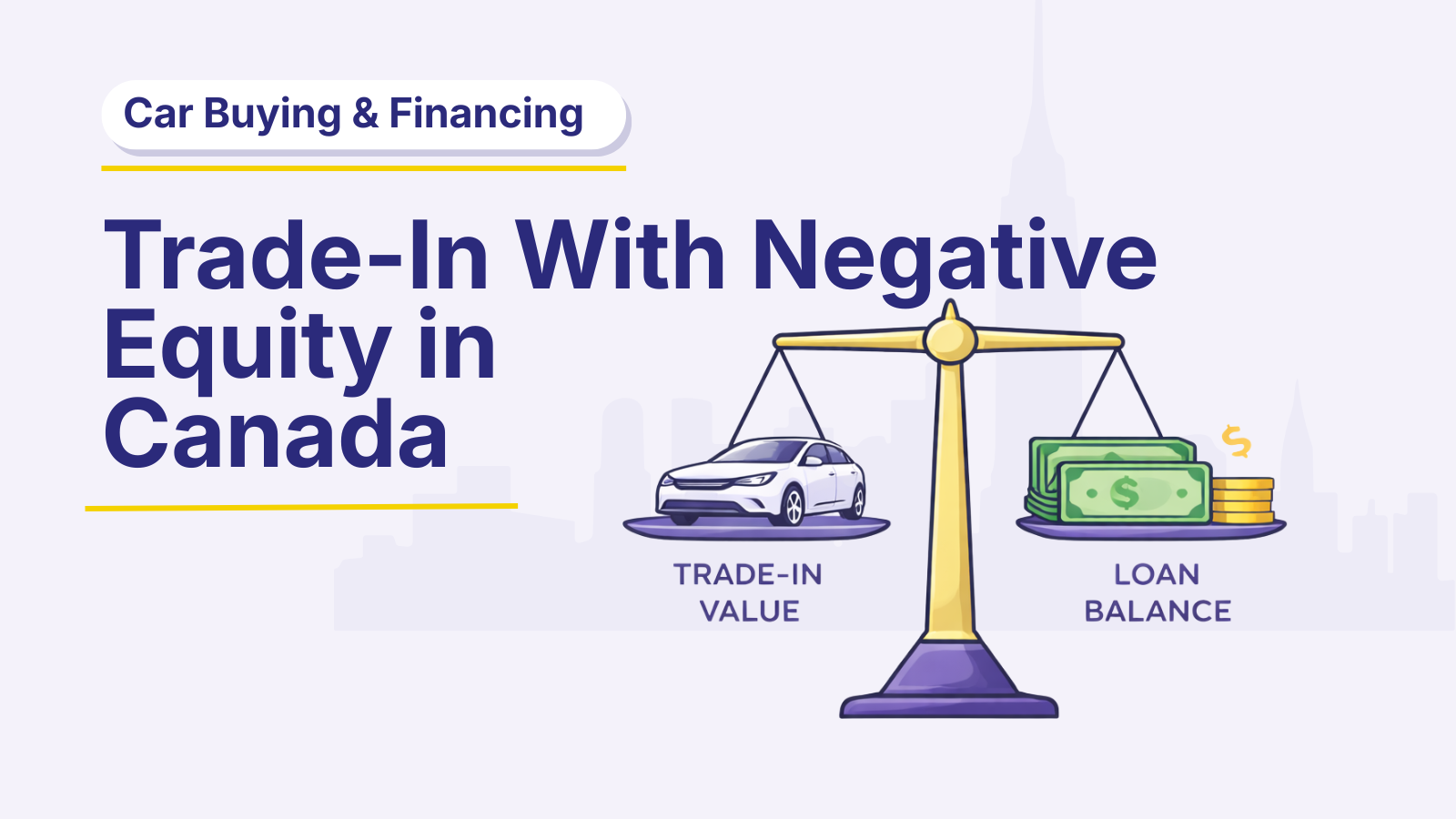
Negative equity occurs when you owe more on your vehicle than its trade-in value.
Trade-In With Negative Equity in Canada
Rolling negative equity into a new car loan is possible but must be structured carefully.
Negative equity occurs when you owe more on your vehicle than its trade-in value.
Trading in a vehicle that still has a loan balance is common in Canada. However, when the amount you owe is higher than the vehicle’s trade-in value, this creates what is known as negative equity.
For more detailed information about vehicle financing and approval requirements, explore our full collection of car loan guides in Canada.
Negative equity does not automatically prevent you from financing another vehicle — but it does require careful structuring to avoid long-term financial strain.
What Is Negative Equity?
Negative equity occurs when:
- Your remaining loan balance is higher than your vehicle’s current market value
- The trade-in offer does not fully cover the outstanding loan
This situation is sometimes referred to as being “upside down” on a car loan.
Rolling negative equity into a new car loan is possible but must be structured carefully.
Can You Trade In a Car With Negative Equity?
Yes. Many Canadians successfully trade in vehicles with negative equity by rolling the remaining balance into a new car loan.
However, approval depends on affordability, vehicle choice, and loan-to-value limits.

How Negative Equity Is Rolled Into a New Loan
When you trade in a vehicle with negative equity, the remaining balance is added to the new loan amount.
| Scenario | Amount |
|---|---|
| Old loan balance | $18,000 |
| Trade-in value | $14,000 |
| Negative equity | $4,000 |
| New vehicle price | $25,000 |
| Total new loan | $29,000 |
The key is ensuring the new loan remains affordable and within lender guidelines.
When Rolling Negative Equity Makes Sense
Rolling negative equity may be reasonable when:
- Your current vehicle is unreliable or unsafe
- The new vehicle improves reliability and long-term costs
- Monthly payments remain manageable
It is often paired with longer loan terms or down payments to offset risk.
Risks of Trading In With Negative Equity
Without careful planning, negative equity can compound financial pressure.
Risks include:
- Higher total loan balance
- Longer repayment periods
- Increased interest cost
This is why understanding total loan cost is essential.
Understanding total loan cost is critical when trading in with negative equity.
How Credit Profile Affects Approval
Lenders evaluate negative equity differently based on credit profile.
- Strong credit may allow higher loan-to-value limits
- Fair or rebuilding credit requires tighter affordability controls
If credit is challenged, learn more about options on thebad credit car loans in Canada page.
How to Reduce Negative Equity Before Trading In
Reducing negative equity improves approval odds and loan terms.
- Make additional principal payments
- Wait for depreciation to stabilize
- Use a cash down payment to offset balance
Pre-Approval Helps Avoid Over-Commitment
Getting pre-approved before trading in allows you to understand how much negative equity can be safely absorbed.
This process is explained on the car loan pre-approval page.
Interest Rates and Negative Equity
Loans that include negative equity often carry higher APRs due to increased lender risk.
Understanding APR is essential. See APR vs interest rate in Canada for details.
Estimating Payments With Negative Equity
You can model payments using the car loan calculator to see how rolled-in balances affect monthly costs.
Documents Required for a Trade-In
- Vehicle ownership
- Loan payoff statement
- Proof of income
- Government-issued ID
A full list is available on the documents checklist page.
Frequently Asked Questions
What is negative equity on a car loan?
Negative equity occurs when you owe more on your vehicle loan than the vehicle’s current trade-in value.
Can I trade in a car with negative equity in Canada?
Yes. Many Canadians trade in vehicles with negative equity by rolling the remaining balance into a new loan.
Does negative equity affect interest rates?
Yes. Loans that include negative equity may have higher APRs due to increased lender risk.
Is it better to pay off negative equity first?
Paying down negative equity can improve loan terms, but in some cases rolling it in may be necessary for transportation needs.
Does pre-approval help with negative equity?
Yes. Pre-approval helps determine how much negative equity can be safely included in a new loan.
Next Steps
Understanding total loan cost is critical when trading in with negative equity.
If you’re considering a trade-in with negative equity, you can apply online to review available financing structures.
You may also want to review car loan rates in Canada before proceeding.

The ZoomCarLoans Editorial Team brings you practical advice on car financing, credit building, and vehicle buying in Canada. Our goal is to make car loans easier to understand — and easier to get approved for.


